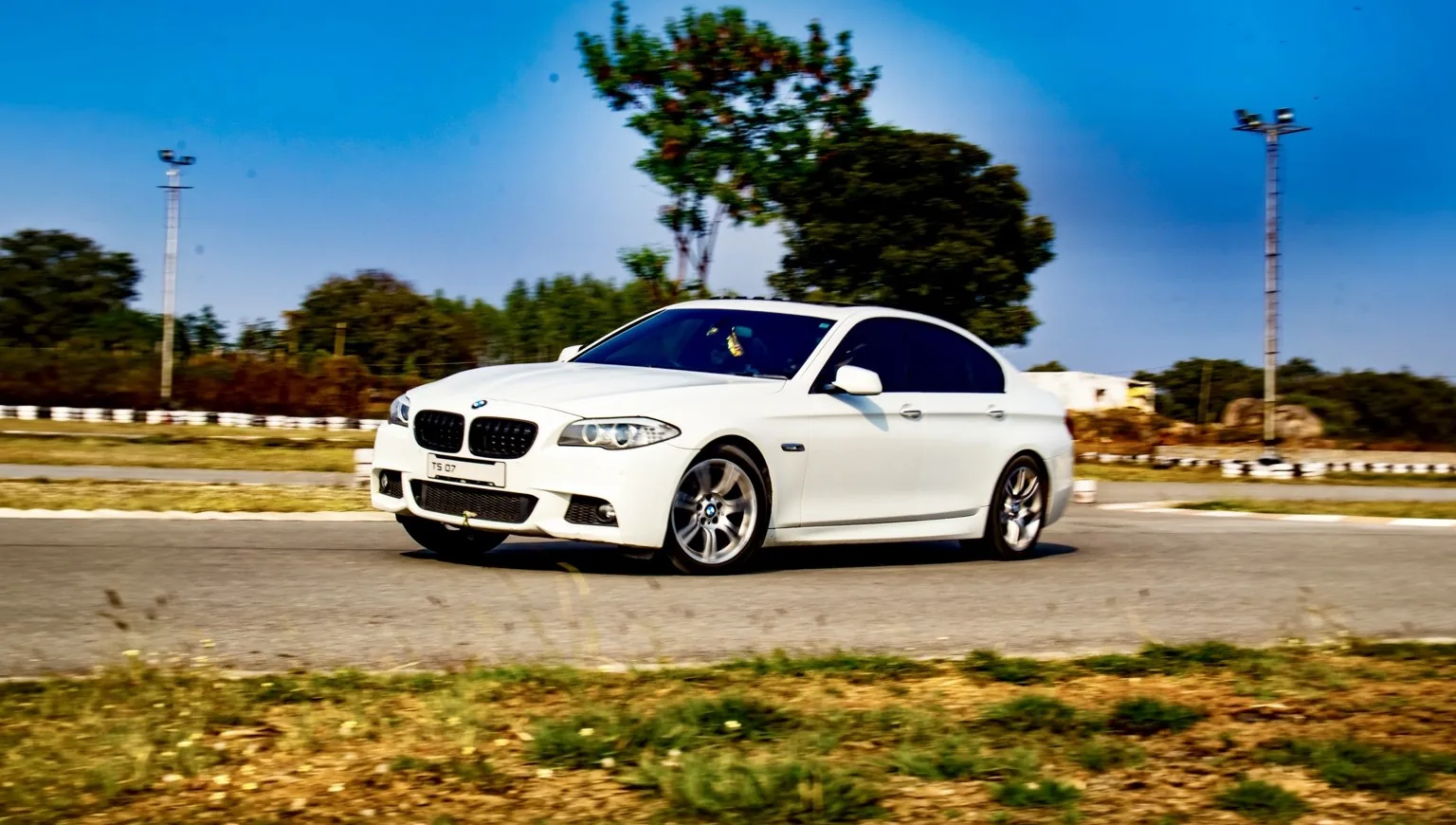
There are good cars. There are great cars. And then there are cars so spectacular to drive that you forgive them for being catastrophically expensive when neglected.
Welcome to the BMW 530d F10: nearly two tonnes of German luxury, rear-wheel drive and a straight-six diesel with enough torque to keep the rear-tyre industry in excellent health.
After three years of ownership and numerous F10s through the Code6 workshop, our conclusion is complicated. We absolutely love this car. We are also very familiar with what it can cost to keep alive.
A 5 Series With a Very Interesting Family Tree
Before we talk about engines, the chassis deserves its moment. The F10 shares its broader architectural family with the contemporary F01/F02 7 Series and the F06/F12/F13 6 Series. That is quite a pedigree for a car wearing the supposedly sensible 5 Series badge.
And the family tree gets more interesting. The first-generation Rolls-Royce Ghost, the “baby Rolls-Royce”, drew on the contemporary 7 Series architecture. The Wraith was developed from that Ghost. No, an F10 is not a Rolls-Royce with a different grille. The Ghost and Wraith were extensively re-engineered for their own size, structure, insulation and character. But the distant family resemblance in philosophy is hard to miss.
BMW made this generation of 5 Series feel substantial without making it feel cumbersome. It is a large, deeply refined executive saloon, yet underneath all that luxury sits a chassis that actually wants to be driven.
The Strange Silence at Serious Speeds
One of our favourite things about the F10 is how quiet it remains at speed. And we are not merely talking about a relaxed 100 or 120 km/h cruise.
During our ownership, even at very high speeds in appropriate controlled conditions, the cabin felt remarkably isolated. Wind noise was well suppressed, the engine settled into a distant hum and the car remained composed. The silence is almost deceptive: the speedometer can be telling a completely different story from what your ears and backside are reporting.
That character comes from a combination of body rigidity, noise isolation, suspension mounting, aerodynamic work and the natural smoothness of a straight-six. The tall cruising gears help too. It is not one trick. It is an entire car working together.
The important caveat is that silence does not change stopping distance, tyre grip or reaction time. The F10 makes speed feel uneventful, which is precisely why it requires restraint.
It is not a sports car pretending to be luxurious. It is a luxury car that turns out to be exceptionally good at driving.
The Original 530d: When BMW Was Still Building Them in Germany
The first batch of F10 530ds sold in India arrived as completely built units from Germany. Produced at BMW's Dingolfing facility, these early 2010–2012 cars came equipped with the original N57 3.0-litre straight-six diesel producing approximately 245 PS.
And they were rather special. Some early configurations featured electronically controlled adaptive dampers, offering an additional degree of ride control that wouldn't necessarily be available on later Indian-market variants.
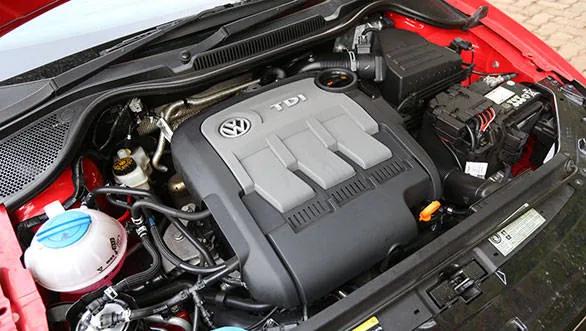
Under the bonnet sat the original N57, featuring a Bosch CP3 high-pressure fuel pump, the earlier intake arrangement and an air-filter housing design that wasn't particularly friendly to routine servicing.
The engine delivered tremendous low-end torque and refinement, but it wasn't especially enthusiastic about revving beyond its useful powerband. By approximately 4,400 rpm, there wasn't much point in asking for more.
These engines responded well to remapping, although in our experience, conventional Stage 1 setups generally struggled to deliver a genuine 300 hp.
Still, it was a magnificent engine for effortless cruising. Then came the updated N57.
N57TU: BMW Decides the Diesel Should Rev Like a Petrol
As the F10 evolved, India received locally assembled variants, updated styling and revised equipment packages; specifications vary by production year and market. M Sport bumpers, staggered 18-inch alloy wheels and refreshed interior combinations made the car considerably more attractive.
Unfortunately, some of the adaptive suspension equipment available on earlier imports was no longer included in the configurations we commonly encountered.
But the biggest changes were under the bonnet. The N57TU represented a substantial engineering update.
BMW revised the starter motor, glow-plug system, injectors, high-pressure fuel pump, air-filter housing, intake manifold, emissions-related hardware and crankcase reinforcing structure. The revised diesel fuel system included a different high-pressure pump arrangement on relevant variants; pump identification should be confirmed against the engine code and vehicle specification.
Output increased to approximately 258 PS in the familiar updated specification, often quoted as 256 hp depending on the unit used. And the way the engine delivered its performance changed.
The updated N57 felt considerably more enthusiastic at higher engine speeds. Where the original engine was happiest delivering enormous torque and calling it a day, the newer version was surprisingly eager to keep pulling.
For a three-litre diesel, it felt almost like a naturally aspirated petrol engine in the way it responded through the upper part of its operating range. Well, almost. It still had enough torque to remind you that the fuel entering the cylinders was diesel.
And while BMW improved the engineering in several areas, it certainly didn't eliminate the reliability concerns. If anything, the more you investigate these engines, the more problems you discover.
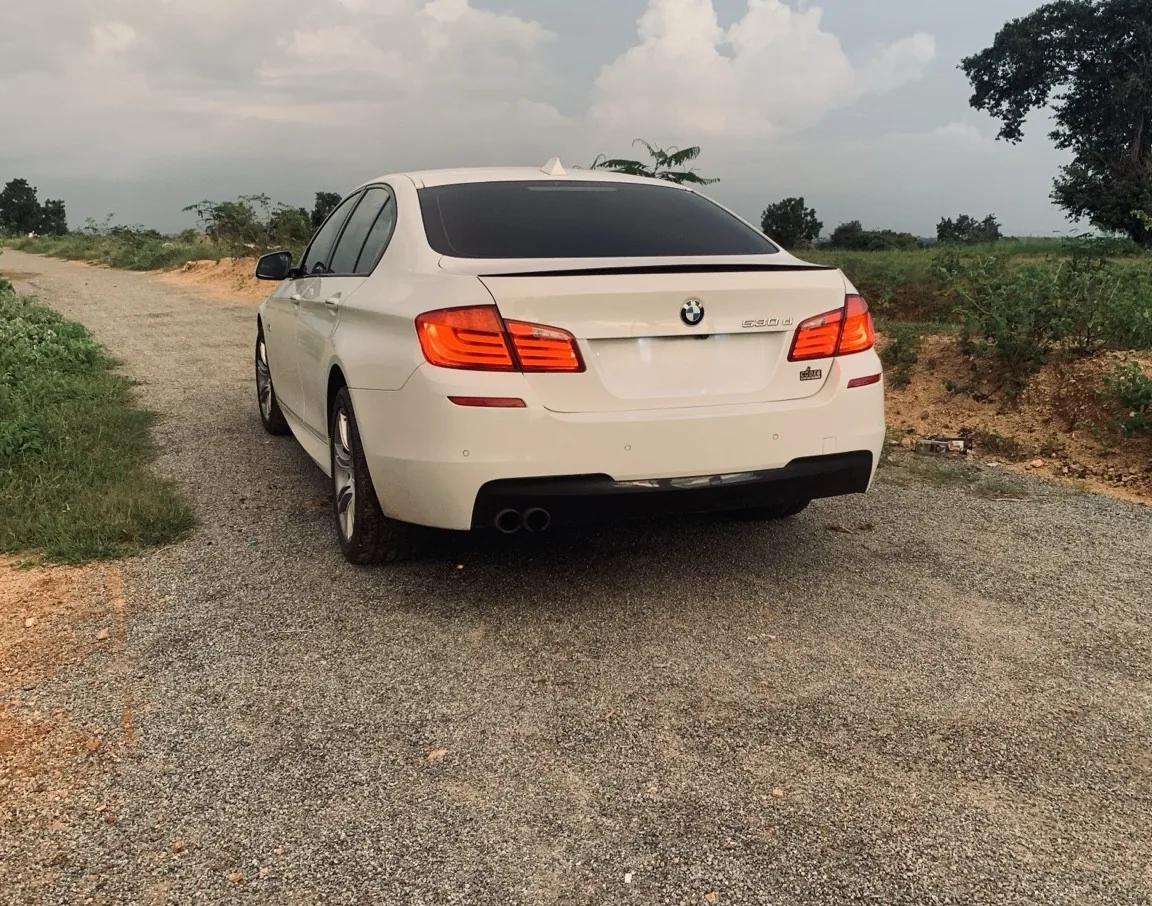
The Gearing: Where BMW Absolutely Nailed It
The F10 530d wasn't designed merely to accelerate quickly. It was designed to cover enormous distances at enormous speeds with minimal effort.
And this is where the combination of the N57, ZF 8HP and final-drive gearing becomes spectacular.
Compared with the shorter, more acceleration-oriented gearing encountered in certain 3 Series and 6 Series configurations, the 530d feels exceptionally long-legged.
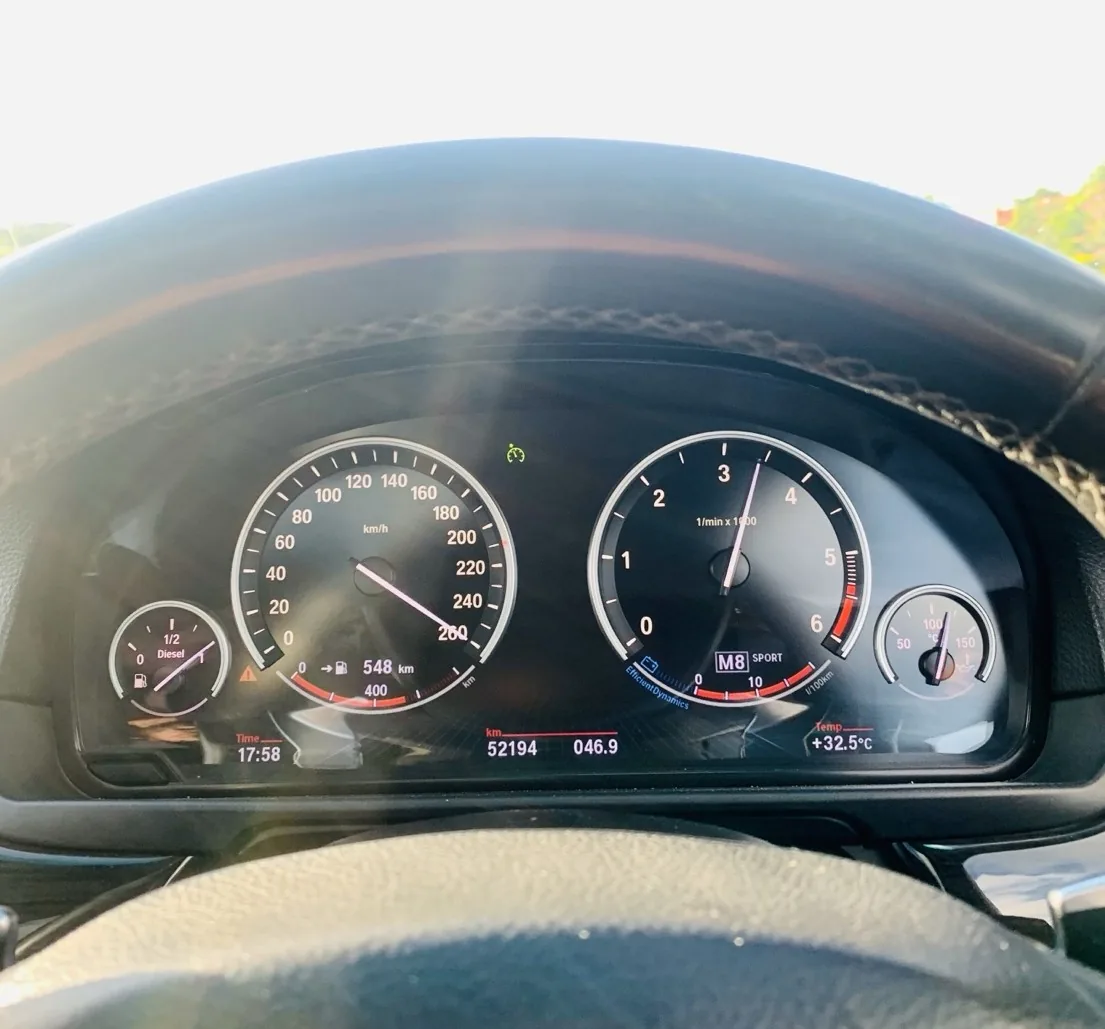
In our ownership experience, the long gearing kept engine speeds exceptionally low during steady highway cruising.
The original instrument-cluster photographs also capture how calmly the engine appears to turn at high indicated road speeds, although the readings are not a substitute for GPS-verified performance data.
Tyre size, vehicle specification and final-drive ratio vary, but the underlying character is unmistakable. This thing was built to cruise.
Some cars sound like they're preparing to throw a connecting rod through the bonnet at serious speeds. The F10 just gets on with the job.
It's effortlessly refined. The engine feels relaxed, the transmission seems perfectly happy and the entire vehicle gives you the impression that it was engineered for precisely this purpose.
Fuel Economy: Two Completely Different Personalities
Drive a 530d sensibly and it can deliver genuinely impressive fuel economy for a large three-litre diesel luxury sedan.
The tall gearing, low-rpm torque and efficient transmission make relaxed cruising remarkably economical. But start exploiting the engine's performance and everything changes.
During very demanding high-speed driving, particularly at speeds exceeding 200 km/h on controlled high-speed routes, we've observed fuel economy falling to approximately 4–5 km/l.
Yes, four to five. The same engine that can be impressively economical when driven gently suddenly begins consuming diesel with remarkable enthusiasm.
That's aerodynamics for you. At high speeds, overcoming air resistance requires substantially more power. The engine might make it feel effortless. Physics still sends the bill.
Traction and Handling: The Ocean Liner That Thinks It's a Sports Car
Now comes one of the most entertaining things about the F10: its handling.
Calling it a car feels almost disrespectful. It's a land yacht. An ocean liner. A massive German luxury sedan that has absolutely no business behaving the way it does through corners.
And somehow, BMW made it work.
Floor It. Watch the Traction Light Flicker.
The N57 produces enormous low-end torque. And the rear tyres don't always appreciate it.
Floor the accelerator at low speeds and the DSC traction-control light can start flickering away on the dashboard.
The engine wants to send enormous torque to the rear axle. The electronics would prefer that the tyres maintain some contact with reality. And thank goodness for that.
With DSC fully active, the car intervenes relatively early to manage wheelspin and preserve stability. But press the DTC button and things become considerably more interesting.
DTC: The Nanny Loosens Her Grip
Dynamic Traction Control allows a greater degree of wheel slip than the normal DSC setting. It makes the car feel more playful and less restricted.
Think of it as having a nanny looking after you. She's happy to let you have a little fun. But once things start getting too ambitious, she may step in and remind you who pays the insurance.
DTC retains some stability-control intervention, but with reduced margins compared with normal DSC. It isn't a guarantee against losing control.
And that's important. Because the F10 has more than enough torque to overwhelm its rear tyres.
Once It Gets Moving, Everything Changes
The remarkable thing is how composed the car becomes once the initial low-speed traction limitations are behind you.
Mechanical grip is excellent. The chassis feels planted, predictable and confidence-inspiring.
There's a mild tendency towards understeer near the handling limit, which is understandable. Manufacturers generally favour progressive understeer because it tends to be easier for an average driver to manage than sudden oversteer.
But the F10 feels surprisingly neutral for its size. The balance is excellent. And its high-speed composure is something genuinely special.
During high-speed driving in suitable controlled conditions, we've experienced remarkable straight-line stability, including at speeds approaching 260 km/h.
The front end didn't subjectively feel light or nervous. The car remained settled and reassuringly composed. It also demonstrated impressive directional stability during firm straight-line braking when the brakes, tyres and suspension were in good condition.
That doesn't mean the car has zero aerodynamic lift, or that anyone should remove their hands from the wheel at speed. Stability is always dependent on conditions and mechanical health.
But the confidence this chassis inspires is extraordinary. Some cars make speed feel dramatic. The F10 makes it feel ordinary. And that is precisely why it deserves respect.
Rear Tyres: Another Subscription Service
Remember how we mentioned the enormous low-end torque? Well, your rear tyres certainly will.
The F10 can be remarkably hard on its driven tyres when used aggressively. In our experience, spirited driving can wear through a set of rear tyres in under 5,000 km.
Yes. Five thousand.
At this point, your tyre dealer might as well be included in your family WhatsApp group.
Of course, tyre compound, alignment, tyre pressure, road conditions and driving style all make an enormous difference. But the underlying issue is simple.
A heavy rear-wheel-drive luxury sedan with substantial diesel torque can consume rear tyres astonishingly quickly when driven hard.
The factory staggered configuration looks fantastic and works well for traction and handling, but rear tyre rotation options are limited when the sizes differ.
And if you've already switched to softer, high-performance tyres for better grip? Enjoy the traction. And the invoices.
Code6 Verdict: Why We Fell for It
The F10 530d combines space, refinement and chassis poise in a way that still feels rare. It is wonderfully quiet, immensely relaxed and much more entertaining than something this large has any right to be.
And that is why the next chapter matters. The best way to enjoy this car is to understand the engine that makes it special, and the repairs that can make ownership painful.
- BMW
- 530d
- F10
- N57
- ZF 8HP