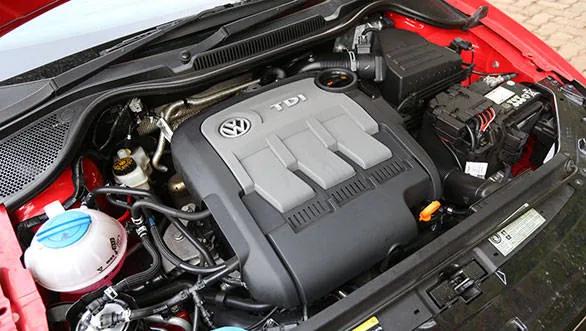
I love the 1.6 TDI CLNA. It is also an absolute bitch to maintain. Those two statements can happily exist in the same sentence, and anyone who has owned a troublesome one will understand why.
This is the 1,598 cc, four-cylinder common-rail diesel offered in the Volkswagen Polo GT TDI, Vento and Skoda Rapid in India. Factory output is 105 PS and 250 Nm. Same engine, three different cars, and plenty for an owner or a workshop to talk about.1
Properly maintained examples have crossed 4,00,000 km. The engine clearly has the ability to go the distance. The uncomfortable question is how much money went into getting it there. Over a long ownership, some examples can swallow enough in maintenance and repairs to make you wonder whether you have quietly paid for another car.
That is the ownership experience this guide is about: the pull that makes you forgive it, the repairs that test that forgiveness, and the upgrades I would actually consider.
The troubled middle child of EA189
Think of the EA189 family as siblings. The three-cylinder 1.2 TDI is the more sedate younger one. The 2.0 TDI is the bigger sibling. Between them sits the 1.6, apparently determined to turn every family gathering into an incident.
There is a real family resemblance beneath the joke. Selected components and aftermarket upgrades overlap with the 2.0 TDI, giving the 1.6 a much broader playground than its displacement suggests. Exact part numbers and engine codes still matter; family resemblance is a starting point for checking compatibility.
Why the acceleration is addictive
The first-to-second shift, followed by that hard surge of boost, is the bit that gets me. It can feel as though your organs have moved towards the back seat and your eyeballs are looking for somewhere behind your skull to hide. That is the sort of ferocious, slightly ridiculous sensation that makes this engine addictive.
A healthy Stage 1 car can feel properly violent. On the 15-inch wheel setups I am referring to, that has meant fighting for traction even in fourth gear. Tyre grip and the road surface make a huge difference, so treat that as an example from a particular setup rather than a promise for every remapped car.
The appeal is how eagerly it pulls when the boost arrives. You remember that feeling long after you have forgotten the exact power figure. Unfortunately, you may remember the repair bills for rather longer.
The turbocharger and the replacement bill
My biggest complaint is the turbocharger. Frustratingly, it is also a big part of why I love this engine. The stock unit can move enough air to make a Stage 1 setup feel far angrier than the original 105 PS suggests.
When it fails, a replacement can be quoted at around ₹1.8 lakh for the turbocharger unit alone. Fitting and associated work come afterwards. The turbo gives you a memorable shove; the replacement bill gives your bank account one too.
That figure makes the condition of the existing turbo important when buying or tuning one of these cars. A car that pulls hard deserves a proper health check before you ask it for more.
Injectors and their expensive supporting cast
Next in line are the injectors. And damn those injectors.
Some troublesome examples sounded like a bloody tractor, with enough knocking to make you question everything happening under the bonnet. Repeated injector quantity adaptations did not make that harsh knock disappear on the examples I am describing. Adaptation should be part of the correct diagnostic process; repeatedly performing it is no substitute for finding the fault.
The goodwill experience was frustrating too. Some owners received replacement support from VW, while others paid out of pocket. Back in the day, around ₹1 lakh bought a complete set of four injectors before labour. That is the historical figure, and it needs to be kept separate from current pricing.
| Injector price reference | Parts cost |
|---|---|
| Historical complete set of four | Around ₹1,00,000 |
| Latest VW quote for one injector | ₹36,000 |
| Four injectors at that unit price | ₹1,44,000 |
The latest VW quote above is from October 2026. O-rings, washers and labour are additional to the current injector figures. Confirm the quote for the actual part number before budgeting.
Then the injector return lines want attention as well. Their recurring failures add another repair to an already expensive fuel-system story. Apparently the injectors felt the plumbing was not contributing enough to the workshop bill.
MAF MAP wiring and fuel pumps
The list continues with the mass airflow sensor, or MAF, and the manifold absolute pressure sensor, or MAP. Both are further trouble spots in the cars we see.
The MAP issue can extend beyond the sensor itself. On affected cars with the wiring fault, rectification involves replacing the complete wiring run from the MAP sensor back to the ECU. Replacing the sensor alone leaves the wiring problem unresolved.
The low-pressure fuel pump, or LPFP, is another recurring headache in our workshop experience. Some of these cars can chew through them. Add the sensors, wiring and fuel supply to the turbo and injector bills, and the distinction between a long-lasting engine and inexpensive ownership becomes painfully clear.
EGR cooler bypass and vacuum faults
The EGR system deserves a place on this list too. We have encountered trouble on both the 1.6 TDI and its three-cylinder 1.2 TDI sibling. The cooler bypass flap can stick, and damaged or leaking vacuum hoses can prevent its actuator from working correctly. The EGR valve itself can also develop a fault.
Depending on the fault, the result can be a warning light, reduced power and limp mode. One minute you are enjoying that addictive diesel shove; the next, the car has decided you should experience the performance of a heavily loaded shopping trolley.
An EGR-system fault does not automatically mean the EGR valve has failed internally. Check the cooler bypass mechanism, actuator and vacuum supply alongside the valve and its controls, then repair the component that has actually failed. Replacing a complete assembly while leaving a split vacuum hose in place is an expensive way to keep the same problem.2
Oil cooler body and housing leaks
Oil-cooler body failure is another repair to budget for on the 1.6 TDI. My recommendation is to replace the failed body or housing assembly with a genuine VW unit and the correct seals. The aftermarket replacements we have dealt with have given us repeated leaks, so this is one job where I would spend on the original part.
Saving on the housing becomes rather less impressive when you are paying to have the same job done again. My preference is to repair it properly once and move on.
Rear main seal and engine oil level
The rear main crankshaft seal, behind the flywheel, is another source of oil leaks. We find overfilled engines far too often. Check the oil level using the correct procedure and keep it within the marked range. MAX is not a serving suggestion.
Overfilling can contribute to oil leakage, particularly when excessive oil disrupts crankcase ventilation and pressure control. It is a possible contributor rather than proof of the cause of every rear-seal leak; the leak source and crankcase ventilation also need checking.3
For this repair, my recommendation is again the genuine VW rear seal or sealing-flange assembly. It must be fitted with the correct dedicated installation and setting tool, following the procedure for the actual seal version. Correct positioning matters for the sealing lip and, where incorporated, the crankshaft sender wheel. Poor installation can cause leaks and starting problems.4
For a PTFE sealing lip, the shaft contact surface and lip must be clean and dry, without oil or grease used as an assembly lubricant. Follow the specified installation and settling procedure. A genuine part still needs proper fitting; damaging the lip during installation can send you straight back to another gearbox-removal bill.4
Coolant warnings and the missing information
The early India-spec Polo and Vento units covered here lacked an expansion-tank coolant-level sensor and a coolant-temperature readout on the original red-display cluster. The engine still has coolant-temperature sensing and an overheat warning. The missing tank sensor and the missing display are separate omissions.15
Without the level sensor, there is no corresponding low-coolant level warning. Without a temperature readout, you cannot watch the temperature trend on the original dashboard. That leaves the driver with less useful information as a cooling problem develops.
In some failures we have encountered, steam around the expansion tank, or the tank itself failing, appeared before the driver received an overheat warning. Those incidents are enough to make me uncomfortable relying on that warning lamp alone.
A worthwhile retrofit is a compatible white-display or MaxiDOT cluster, correctly adapted and coded, to provide the temperature readout. Add a sensor-equipped expansion tank and the proper wiring to the cluster for coolant-level monitoring too. The cluster upgrade displays temperature; the tank sensor monitors level.5
The expansion tank should hold coolant, not double as an expensive smoke machine. The Germans do have a sense of humour; I would simply prefer an earlier explanation of the joke.
The rest of the Polo platform experience
Beyond the engine, you still get the familiar squeaks, rattles and assorted noises that come with these ageing cars. A tidy body and solid-feeling doors do not exempt the rest of the car from wear. Judge the particular example by its condition and maintenance history, because the badge cannot tell you what previous owners have postponed.
Technical references
-
Volkswagen AG. Self Study Programme 474 The Vento 2011 India, with the CLNA technical data; and Programme 442 on the 1.6 TDI cooling and engine-management systems. Vento training document | 1.6 TDI functional diagram ↩ ↩
-
Motorservice. EGR cooler bypass operation and vacuum-system faults that can cause reduced power or emergency operation. https://www.ms-motorservice.com/int/en/egr and https://www.ms-motorservice.com/int/en/technipedia/simple-fault-causes-are-often-missed-831 ↩
-
Repsol Lubricants. Effects of excessive engine oil level, including crankcase pressure and seal leakage. https://lubricants.repsol.com/en/news/aceite-coche-supera-maximo/ ↩
-
Elring. Technical service information on PTFE sealing flanges and sender wheels, and dry installation of PTFE oil seals. https://www.elring.com/CELUM/10008/10019/74259.pdf and https://www.elring.com/CELUM/10008/10019/73522.pdf ↩ ↩
-
Gannu_1. Firsthand Polo instrument-cluster retrofit, documenting early Indian cluster features, the missing coolant-level sensor and the additional wiring. Polo cluster retrofit ↩ ↩
- Volkswagen
- Skoda
- Polo GT TDI
- Vento
- Rapid
- 1.6 TDI
- EA189