Brakes suspension and usable traction
Once the car is healthy, a brake upgrade makes sense. For the road-focused Stage 1 build I am describing, my pick would be a properly executed 288 mm front conversion. A matched 288×25 mm setup with suitable pads and fluid is an adequate, sensible target for that use. Repeated track braking or a substantially different build deserves its own assessment.1
Fit the complete compatible brake setup. Check the calipers, carriers, any hub-carrier changes required and clearance inside the actual wheels. A catalogue listing for a 288 mm disc does not establish that it is a direct swap onto every Indian-spec car. Getting it to accelerate harder is entertaining; discovering that the brake conversion was assembled by optimism is rather less entertaining.
Bilstein B6 dampers would also be high on my list. Choose the correct vehicle application and pair them with healthy standard-height springs. B6 is designed as a performance damper upgrade for the original ride height, with vehicle-specific tuning to improve control and grip.2
In my experience, the improvement in traction on these cars can be substantial, particularly when replacing tired original dampers. Better damping helps the wheels follow an uneven surface and makes the car feel more settled as it uses the torque. Tyres, alignment and the condition of the rest of the suspension still contribute to the result.
Fourth-gear wheelspin makes a memorable story. Your tyre dealer does not need another reason to love you.
Turbo injector and camshaft upgrades
The upgrade potential is the other reason this engine keeps drawing me back. You can start with a healthy stock car and a well-calibrated remap, then disappear into a catalogue of turbochargers, fuelling hardware and engine parts. This is how a sensible maintenance budget starts developing a second personality.
CR140- or CR170-based turbo conversions are routes to investigate, alongside hybrids and purpose-built aftermarket options. Select the actual turbo and conversion around the CLNA and the car it is going into. The CR140 or CR170 label alone is not enough to establish fitment: manifold and port compatibility, actuator control, oil lines, exhaust connections and pipework all need to suit the installation. Aftermarket 1.6 TDI turbo upgrades are available, including options intended for the Polo-sized platform.3
Higher-flow injector upgrades exist too. For example, Darkside lists modified Siemens injectors with a claimed 50 percent increase in nozzle flow and includes CLNA applications. The supplier requires ECU recalibration. That is a manufacturer flow claim, not a promise of 50 percent more engine power. Match the injector specification to the turbo and the intended build.4
Performance camshafts are another option for a more developed build. Published 1.6 and 2.0 TDI common-rail camshaft kits include CLNA applications, illustrating the useful overlap with the larger engine. Mechanical clearances and the complete engine configuration still need checking.5
As the target grows, budget for the supporting hardware and calibration, including intercooling, fuel delivery and clutch capacity. The choice of turbo should follow the response and power delivery you want. A larger shopping list, by itself, tells you very little about how the finished car will drive.
Why I would still want one
All in all, the 1.6 TDI CLNA can be an absolute pain in the ass to maintain. I would tell anyone considering one to look hard at the service history, get the car properly inspected and keep a realistic repair budget. A cheap purchase price can become a very short-lived achievement.
And yet I love it. There is something about that surge after the first-to-second shift that makes the sensible part of your brain go quiet. The way it pulls is addictive, and the scope to build on it gives you plenty of reasons to keep the keys.
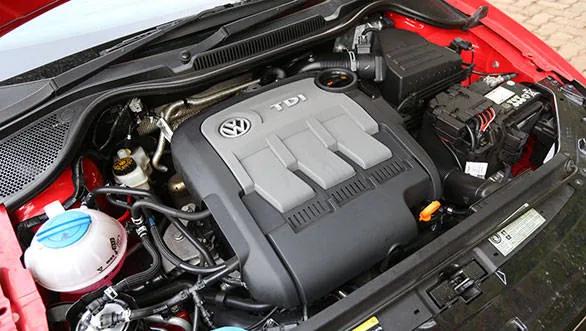
Same CLNA engine, three different cars: Polo, Vento and Rapid. The troubled middle child of the EA189 family, with a talent for emptying your wallet and then reminding you exactly why you keep forgiving it.
Technical references
-
Brembo. Polo 1.6 TDI 77 kW catalogue, showing 256 mm and 288×25 mm front brakes under different PR specifications. Polo brake specifications ↩
-
Bilstein. B6 product information and the distinction between B4, B6 and B8 applications. B6 performance dampers | B6 and standard-height springs ↩
-
Darkside Developments. Aftermarket Borg-Warner or KKK turbo upgrade for 1.6 TDI common-rail applications, including the smaller Polo-platform cars. Exact engine and installation compatibility require confirmation. 1.6 TDI turbo upgrade ↩
-
Darkside Developments. Higher-flow Siemens-based 1.6 TDI injectors, with CLNA in the fitment data and a requirement for ECU recalibration. Higher-flow injector specification ↩
-
Darkside Developments. Performance camshafts for selected 1.6 and 2.0 TDI common-rail engines, including CLNA, with clearance checks specified. Performance camshaft specification ↩
- Volkswagen
- Skoda
- Polo GT TDI
- Vento
- Rapid
- 1.6 TDI
- EA189